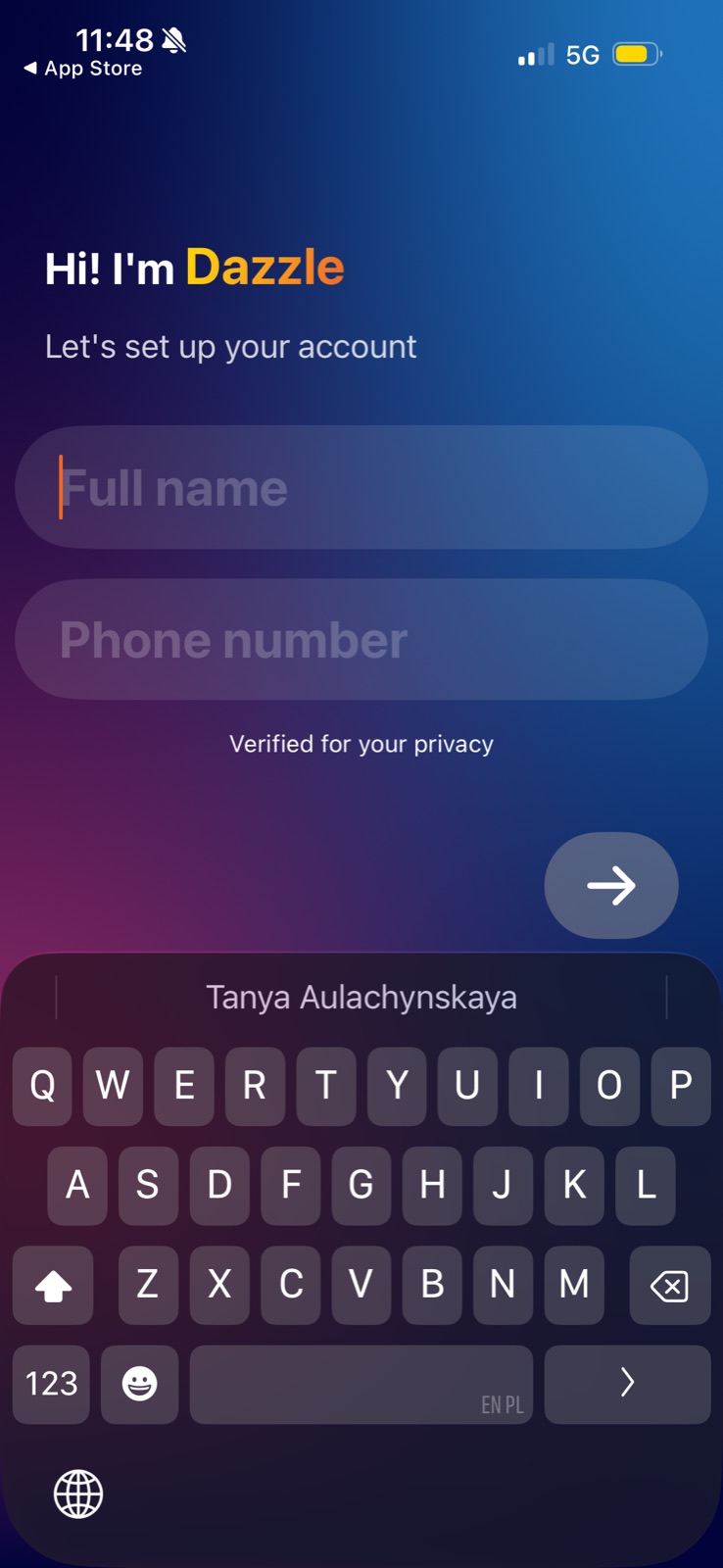
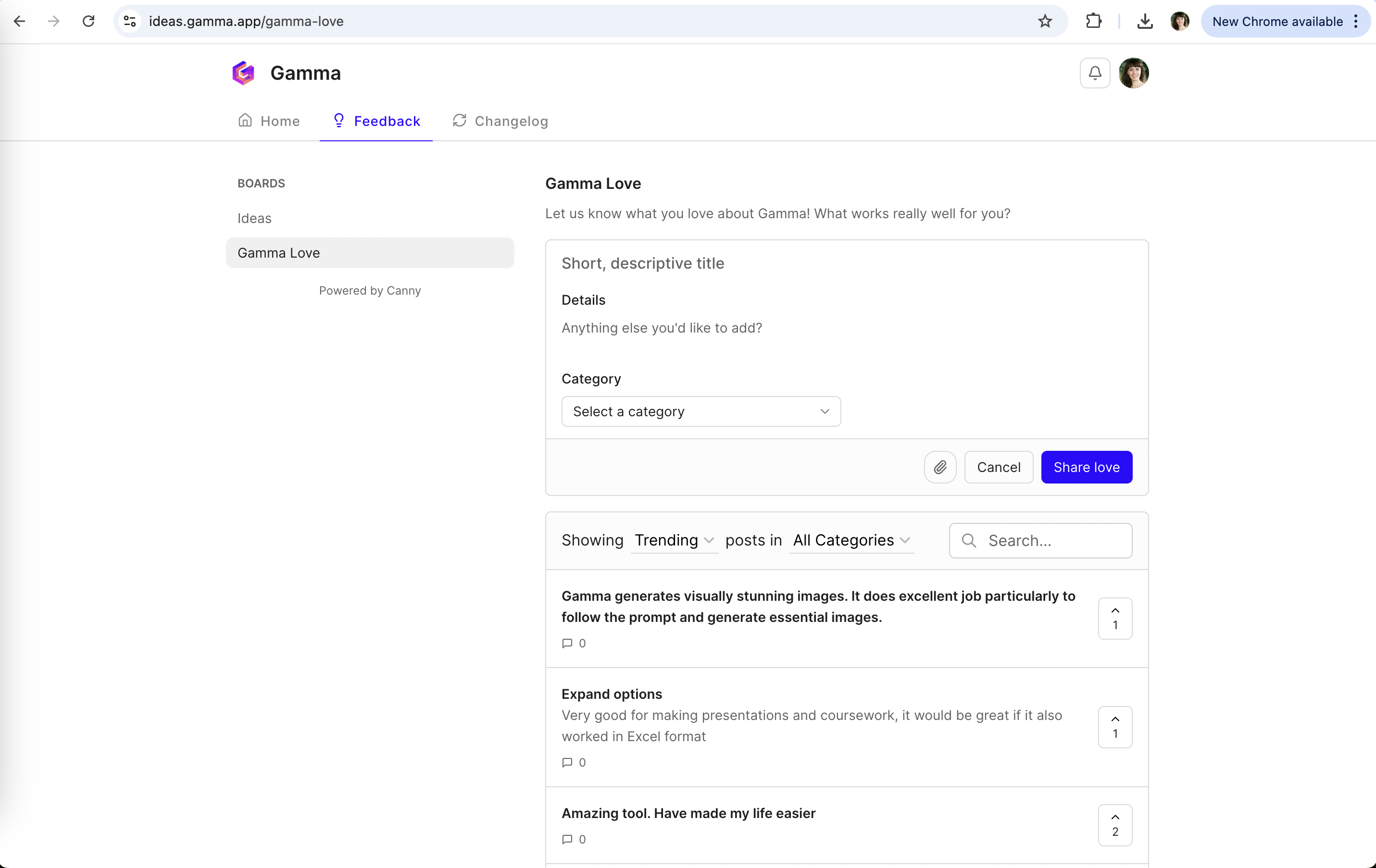
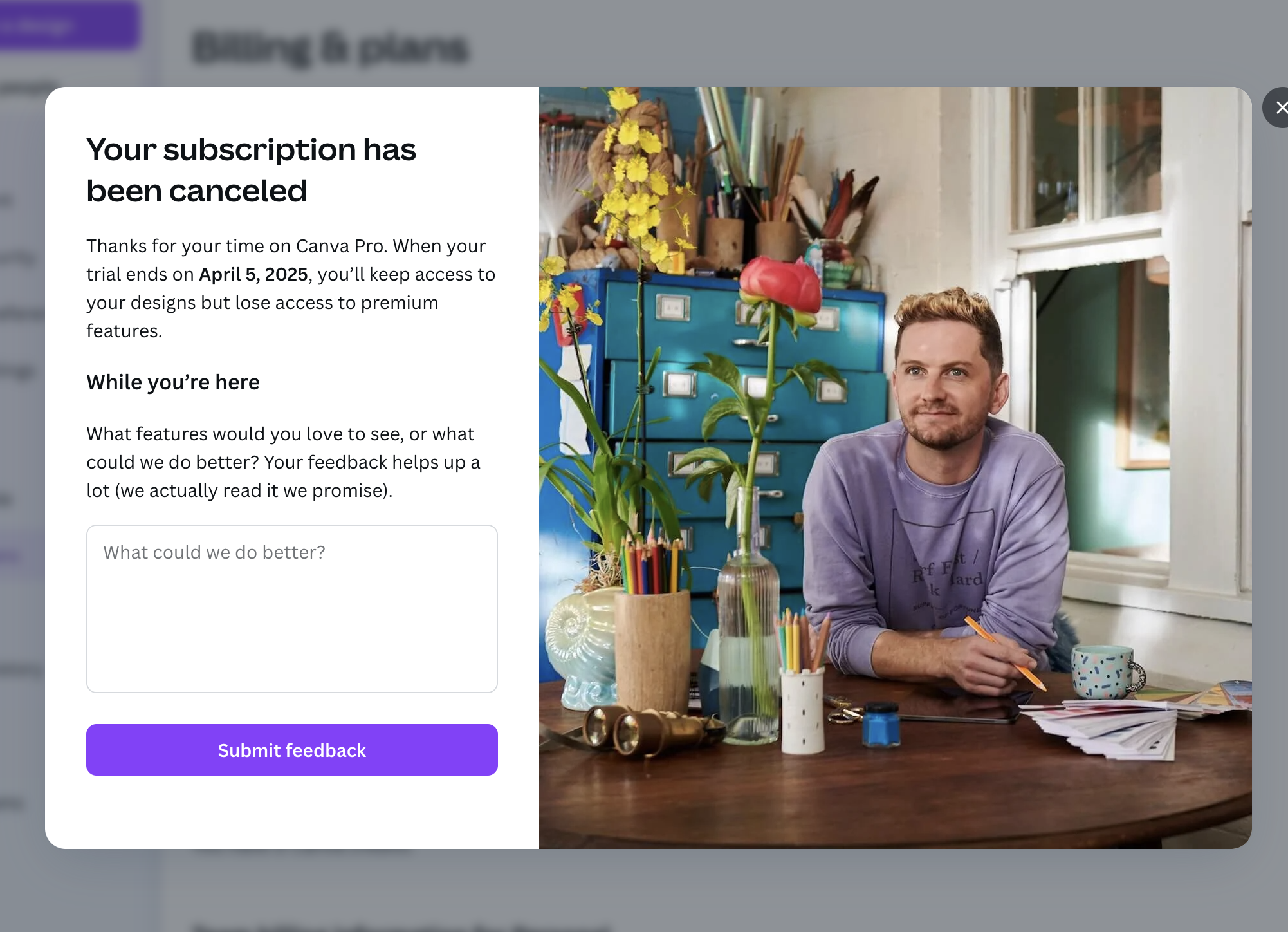
Voice is the product's steady personality; tone is how that voice shifts with the moment, as Mailchimp's style guide puts it. On this site the principle covers microcopy, tone of voice, mascots and personification: an assistant that says "Hi! I'm Dazzle", a "Share love" button instead of Submit, a cancellation survey that says the team really reads it.
NN/g's work gives the most direct evidence. Kate Moran describes four tone dimensions: formal vs casual, serious vs funny, respectful vs irreverent, and matter-of-fact vs enthusiastic. In a follow-up study, 100 participants rated paired web pages that differed only in tone. Casual, conversational and moderately enthusiastic copy scored best on friendliness and trust. A playful, irreverent page was seen as friendlier but less trustworthy, and trust was by far the stronger predictor of whether people would recommend the brand.
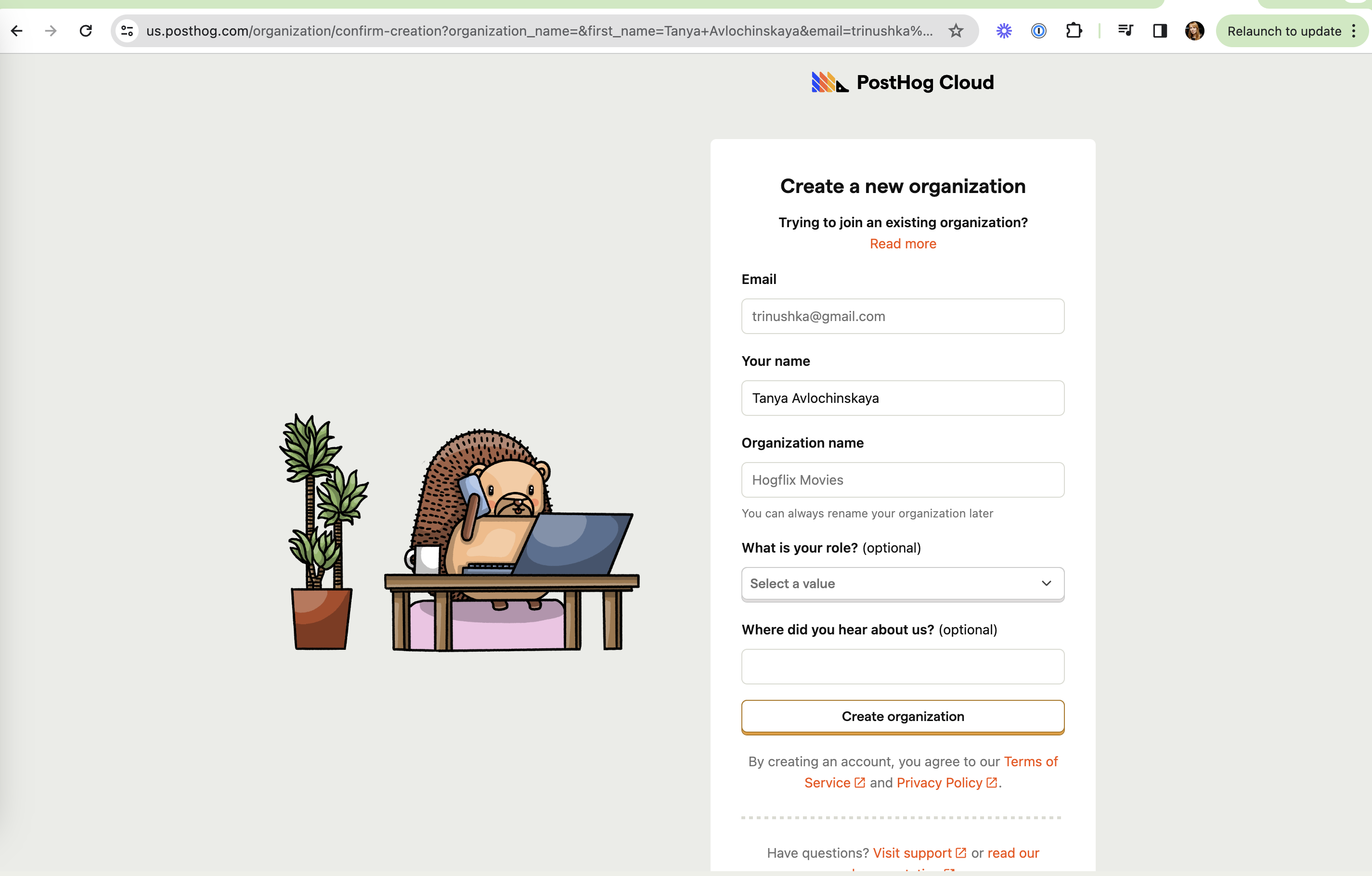
In onboarding, a human voice can turn a form into a conversation and make an ask feel less like paperwork. On paywalls and cancellation flows the stakes are higher, so clarity and sincerity matter more than jokes.
How to use it
- Write a short voice guide (three or four traits plus words to avoid) and apply it to buttons, empty states and errors, not just marketing pages.
- Replace generic labels like Submit or OK with verbs that say what happens, in your voice ("Send feedback", "Start my plan").
- Dial humor down on high-stakes screens such as payment, errors and cancellation, and keep the facts first.
Watch out
- Cute copy that hides what a button does, or jokes at the user's expense, lowers trust; NN/g's study found irreverence cost credibility.
- Guilt-tripping copy on decline buttons ("No thanks, I like wasting money") is confirmshaming, a dark pattern, not personality.