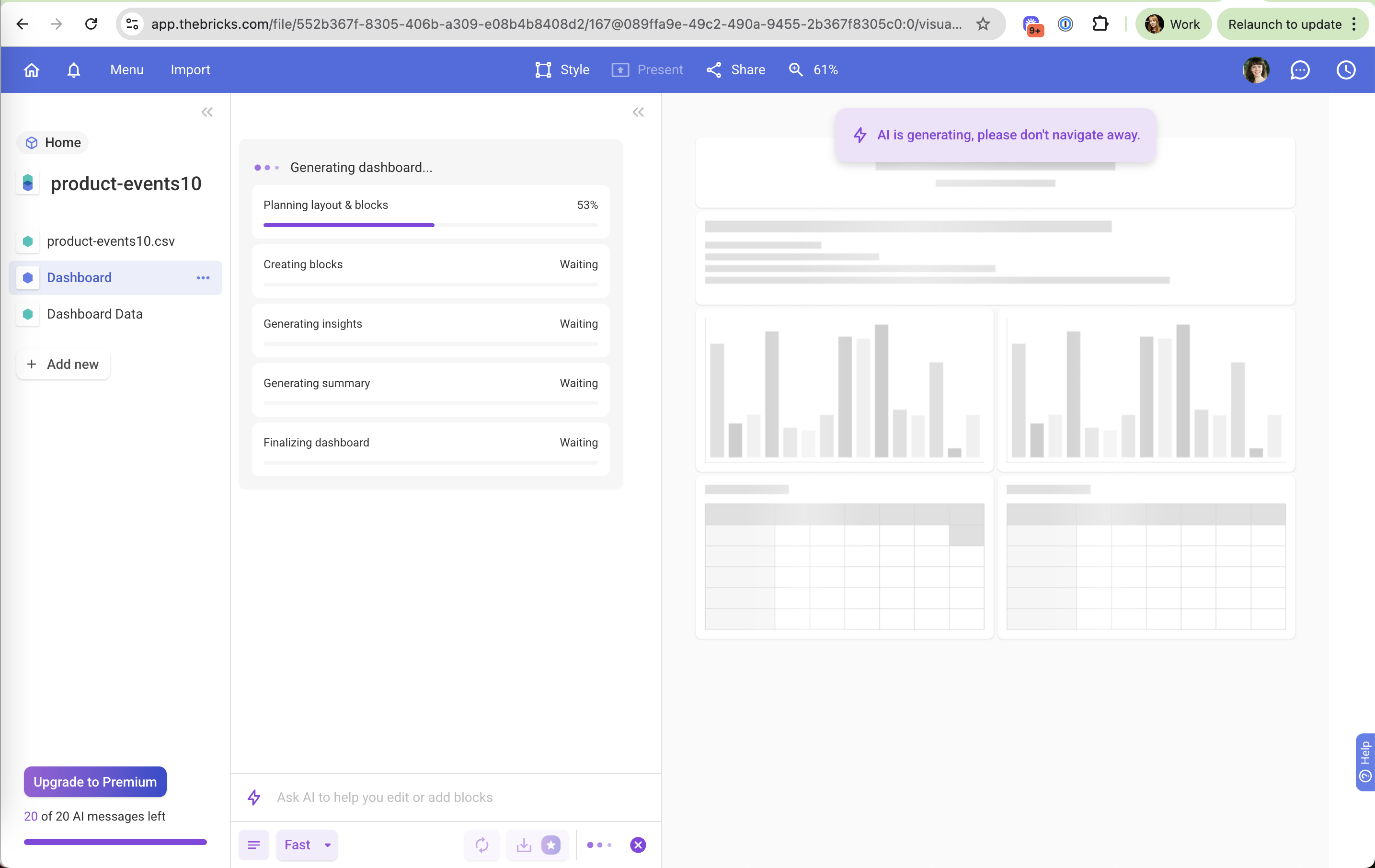
The labor illusion is the boost in perceived value that comes from seeing effort. On the site it covers named progress steps ("Planning layout & blocks 53%") that show the product is doing real work while the user waits.
Buell and Norton (2011) ran five experiments in online travel search and dating sites: when the site showed what it was doing during a search, people sometimes preferred a slower search to an instant one with identical results, and they rated the service higher. The boost was mediated by a sense of reciprocity toward the provider's effort. Buell, Kim and Tsay (2017) extended this to food service: letting customers and cooks see each other raised customer-rated quality by 22% and cut service times by 19%.
For AI and data products that need a few seconds to produce a result, showing the steps turns dead waiting time into evidence of value, which matters right before a first result or a paywall.
How to use it
- During waits over a couple of seconds, show the actual steps being done ("Reading 12 files", "Matching columns") instead of a generic spinner.
- Tie the steps to the user's own input so the work is clearly for them.
- Use a percent-done indicator for longer waits so users can judge how much time is left.
Watch out
- Adding artificial delays or fake steps to look busy is deceptive, and users who notice stop trusting every progress bar.
- Showing effort does not rescue a bad result; the output still has to be good.