 Houseful
How to Divide Household Chores in a Family
A family home generates more work than any other kind: more laundry, more meals, more stuff to tidy and more appointments to remember. It is also the home where the split is most likely to be lopsided, because one adult tends to become the default and everyone else becomes helpers. Here is how to divide it so the work is shared in proportion, from the adults down.
Start with the adults
It is tempting to start a family chore system with the kids. Start with the adults instead. If the two adults’ split is uneven, adding a child’s chore chart only gives the busier parent one more thing to manage.
Sit down together and list everything the household needs in a week, including the planning and the remembering. Then divide the adults’ share first, using the method in how to split chores with your partner: weigh jobs by effort, give each one an owner end to end, and agree out loud what fair means for your work hours.
What a family home adds to the list
On top of the usual cooking, cleaning and laundry, homes with children usually need:
| Job | How often | Effort |
|---|---|---|
| Make breakfast | Daily | 2 |
| Bath and bedtime | Daily | 2 |
| Tidy away the toys | Daily | 1 |
| Nursery or school run | Weekdays | 2 |
| Packed lunches | Weekdays | 2 |
| Pack bags for tomorrow | Weekdays | 1 |
| Homework check | Weekdays | 1 |
| Kids’ laundry | 2–3 times a week | 3 |
| Towels laundry | Weekly | 2 |
These are the tasks Houseful adds to a family’s starting list. The daily and weekday ones add up fast: breakfast, bedtime, school run and lunches alone come to about 48 points a week, more than most couples’ entire cleaning load. That is why “I do the cleaning, you do the kids” rarely balances.
Give children jobs by age
Children’s chores aren’t mainly about getting the work done; at first they create work. They are about growing into a share of the household. A rough guide:
- Ages 3–5: put toys away, put dirty clothes in the basket, help feed a pet, carry their plate to the counter.
- Ages 6–9: make their bed, set and clear the table, sort laundry, water plants, help unload the dishwasher.
- Ages 10–12: vacuum a room, take out the recycling, fold and put away their own laundry, make a simple breakfast.
- Teenagers: real household jobs with a day, like their own laundry, cooking one dinner a week, cleaning the bathroom on a rotation, mowing the lawn.
For younger children, a visual routine works better than a list. Our sister app Starday has free printable routine checklists by age and a chore list for teens.
Teenagers: treat them like a junior roommate
From about 13, the approach that works best with teenagers is the one that works with roommates: a few real jobs that are theirs, end to end, on a fixed day, which they can see on their own phone. Two or three weekly jobs plus their own room and laundry is a reasonable load during school terms. Rotate one heavier shared job (bathroom, kitchen deep clean) between teenagers and adults, so they learn the jobs adults actually do.
Reminders from an app are less loaded than reminders from a parent. “The bins are on your list for tonight” lands differently from “Have you done the bins yet?”.
Adult children living at home
An adult son or daughter living at home is, in household terms, a roommate who doesn’t pay full rent. A fair arrangement usually includes:
- All their own laundry, room and dishes, without reminders.
- A fixed share of the shared chores, for example cooking two dinners a week, the weekly bathroom clean, or the weekly shop.
- A share of the invisible work: adding things to the shopping list when they run out, booking their own appointments.
Agree it as you would with a roommate, in writing, with a review date. It is much easier to set this up when they move back than to change the habit six months in.
Make the system visible to everyone
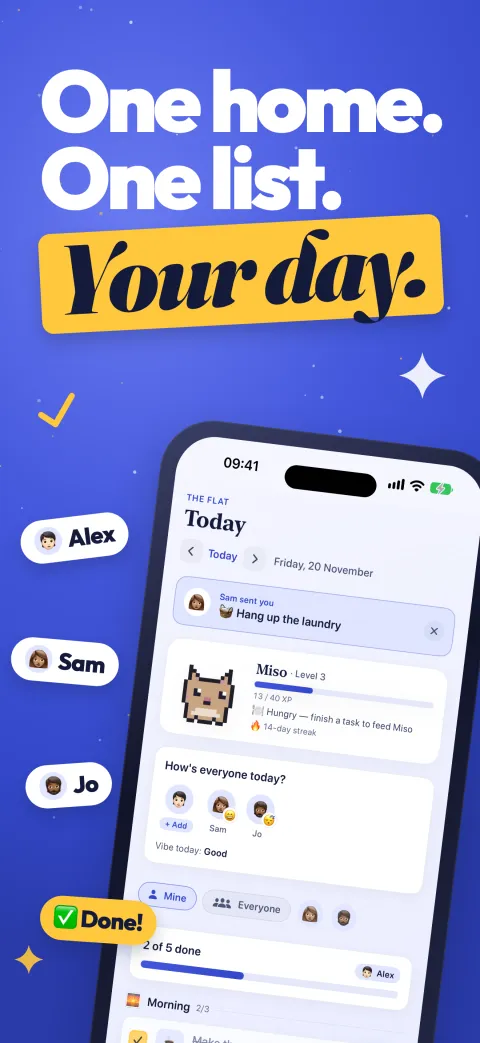
Families have the most moving parts, so the split needs to live somewhere everyone can see it. A fridge chart works for young children. Everyone with a phone needs their own day on it: what is theirs today, and what is everyone’s. The adults also need to see the whole household, including who is carrying most of the load this week.
Houseful was built for exactly this: one household list, each person’s own day, week and month, tasks sent to someone in one tap, and a fair-share bar that shows who carried the load. Everyone joins with the household code on their own phone, teenagers included, and nobody needs an account.
One list for the whole household
Houseful gives everyone at home their own day from one shared list. Add every adult and teenager, split the weekly jobs by effort, and see who’s carrying the load. One Houseful Pro purchase covers the whole household.

iPhone app coming soon. Until then, iPhone users can use the web app, which syncs with Android.
Questions people ask
How should parents divide household chores?
List every job the household needs, including the childcare tasks and the planning, score them for effort and frequency, and split the total so it matches what you both agree is fair given your work hours. Each parent should own their jobs end to end, including noticing when they need doing.
What chores should a teenager do?
Their own room and laundry, plus two or three real household jobs on a fixed day: cooking one dinner a week, taking the bins out, cleaning the bathroom on a rotation, or doing the weekly vacuum.
Should adult children living at home do chores?
Yes. A fair arrangement treats them like a roommate: all of their own laundry, room and dishes, plus a fixed share of the shared jobs, agreed in writing with a review date.